



Hurry, only 4 left in stock
Couldn't load pickup availability
-
Publication Date: Not available
-
Print Length: Not available
-
Binding: Not available
-
Best Sellers Rank: Not available
-
Return Policy 1. Return Window - Eligible for return within 30 days of delivery. 1605. Return Conditions - The book must be brand new (unused, unmarked, and undamaged). Important Notes: If the returned book is damaged or missing components, the refund may be denied. If the book arrives damaged (e.g., due to shipping issues), a full refund will be issued. For returns due to non-quality issues (e.g., buyer’s change of mind), the customer must cover return shipping costs.
-
Ships in 1 Business Day
Share
Guaranteed Secured Checkout

MORE DETAILS
FULL DESCRIPTION
WHAT'S INCLUDED
MORE DETAILS
SHIPPING & RETURNS
Return Policy 1. Return Window - Eligible for return within 30 days of delivery. 1605. Return Conditions - The book must be brand new (unused, unmarked, and undamaged). Important Notes: If the returned book is damaged or missing components, the refund may be denied. If the book arrives damaged (e.g., due to shipping issues), a full refund will be issued. For returns due to non-quality issues (e.g., buyer’s change of mind), the customer must cover return shipping costs.
ABOUT THE AUTHOR
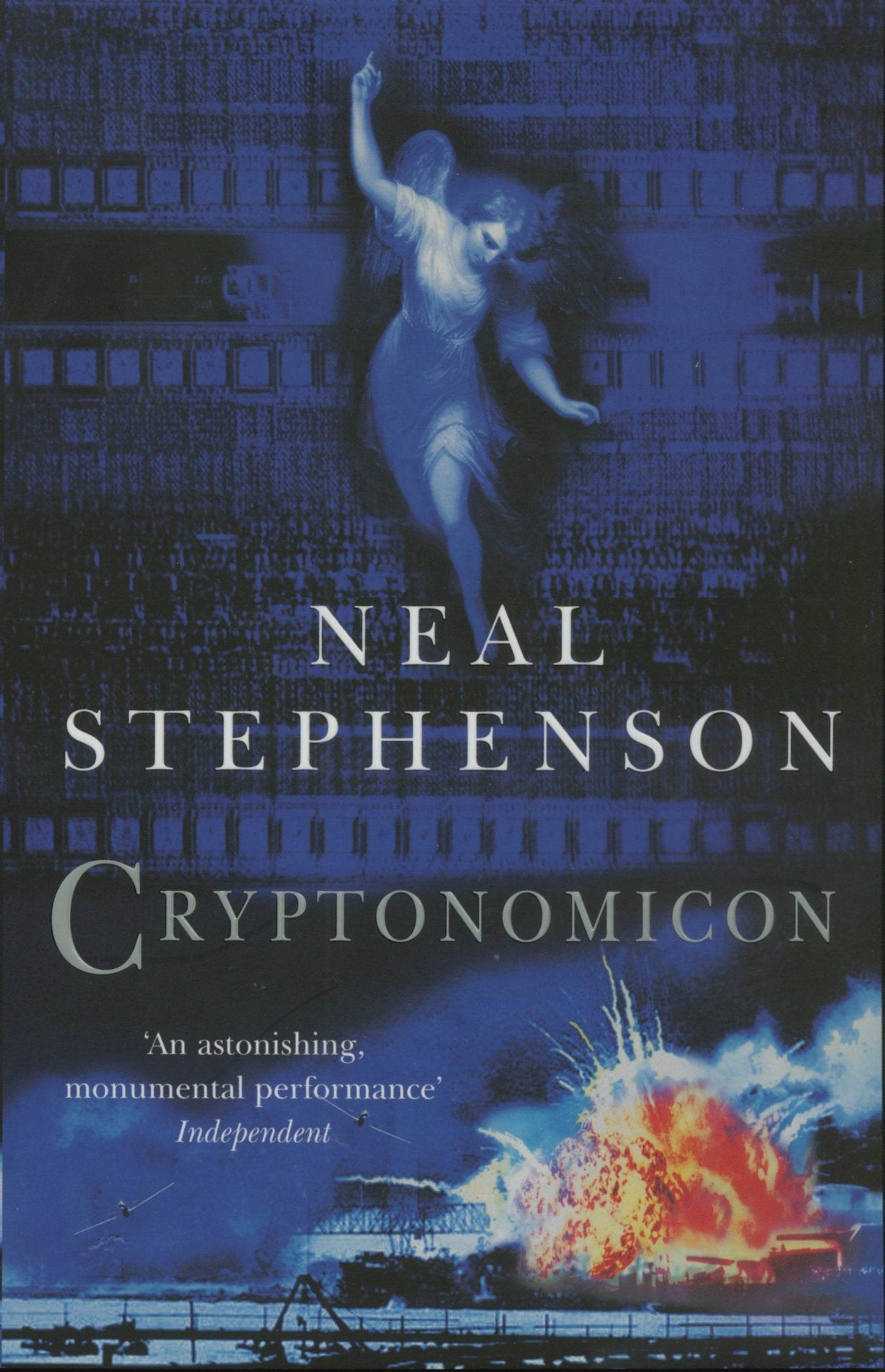
I read a lot, a whole lot. I first read this monster from the library the month it came out, decided (after I had recovered from the experience) that it was probably the best thing I'd read in the whole of the `90s, went out and bought a hardback for myself, and set it in a place of honor on my shelves. Nearly six years on, I find that aging has only improved it. I've been working my way slowly through his recent trilogy, but Cryptonomicon is still better. His characters exist in a t least five dimensions and will stick with you from a long, long time. There's Lawrence Waterhouse, math prodigy and buddy of Alan Turing, who becomes one of the key codebreakers of World War II. There's Marine raider Bobby Shaftoe, a survivor of everything the war can throw at him -- except heroism. There's Randy Waterhouse, Lawrence's equally nerdy grandson, master Unix hacker, and generally nice guy. There's America Shaftoe, partly-Filipino granddaughter of Bobby, master deep diver, and all-round tough cookie -- which doesn't keep Randy and Amy from falling in love. There's Avi, Randy's best friend and front-man in all their business ventures -- in this case, building the world's first politically independent data haven, much to the dismay of major governments. There's Lieut. Goto Dengo, engineer for the Nipponese army and builder of the primary hiding place of Japan's stolen billions in gold bullion. And, moving like mist between the two separate generations, there's the _eminence gris_ Enoch Root, Catholic priest, doctor, cryptographer, conspirator, and take-no-prisoners philosopher. Add to this list several dozen supporting players, all equally well realized, and the richness of the narrative texture is unbelievable. Besides the sheer enjoyment you get from Stephenson's Roman-candle style, his highly original metaphors and similes, and his ironic sense of humor, you're gonna learn a lot about cryptography (both the wartime vintage and the present-day digital variety), and about irregular warfare, and a score of other subjects. Yes, it's a huge book -- but it has to be. The heft also allows space for the author's sprawling digressions on topics as diverse as jungle survival, the similarities between computers and church organs, granny-grade furniture, U-boat life, several Holocausts, imprinting of sexual fetishes, Finnish psychology, the neuro-sociological origins of the ancient Greek pantheon, how to divide up an inheritance, the socioeconomic underpinnings of paper currency, and the proper way to eat Cap'n Crunch. It doesn't all advance the plot, but don't worry about it. Every single paragraph in this thing is worth reading, savoring, and storing away for later rethinking. I'll be reading it against in another decade.
If you need to sit back on the sofa and graze upon a novel this is probably not for you. With a Stephenson book you have to do a lot of the work yourself. "Cryptonomicon" is a bit easier to approach than some of his other work. Yes, he is verbose and the novel is very long. I usually read my Stephenson two or three chapters a day and take as much time as necessary. Kindle is a great means of dipping in and out of this novel.I put off reading "Cryptonomicon" for years because I'm not much into math and have little to no interest in codes. But, there is a season for everything. I read a bunch of Amazon reviews and determined that degrees in math and code were not necessary. In a Stephenson novel you can skip chunks that are going over your head without loosing the thread of the writing. You can loose ten pages out of the thousand. Of course, as you can see from other reviews, there is a point at which you can skip too much and have nothing. This novel and Stephenson's writing in general reflects how one approaches navigating on a computer. Sample here and there. Wander to what is interesting. Skip the dull. Back up and fill in what you missed. Keep it all to short chunks. Come back tomorrow and it is all new again. Cyberpunk.It is really easy to think "Pynchon." There are some commonalities, but don't get nuts comparing the two. They are both contemporary novelists and share traits with other contemporary authors. Enoch Root fills a similar function as "Mason & Dixon's" mechanical duck. Character names are derived in a similar manner and are joke ish. Stephenson's WWII Waterhouse and Pynchon's WWII Slothrop have similar missing personality chunks. Character development is all but non existent. Characters learn new stuff, but just file it away rather then endure a personality epiphany. If you must have Adler and Freud in your novel, look elsewhere. You will find some Jung. Math and Jung. Who'd 've thunk?Advice? I really don't like to give this sort of advice. If you love it - good. If you hate it - good. You read it and are making your own decision. No, this isn't a good choice for a first modern novel. Nor is it good for research into Bletchley Park. Nor are there revelations about Alan Turing. No undersea salvage tips. It does ask interesting questions about information capitalism and the value of words and the value of gold. It provides some interesting "plot" which is ignored when it gets in the way of a diverging thread. As for the ending? Well, it was time. Certainly not a lovely after final commercial TV tag. No final star date. Just a river of gold.
Shipping
Ships in 1-2 Business Days.
Click Here for more info.

30 Day Returns
Enjoy Free 30 day Returns & Exchanges
Top-notch support
Email us for help with an order.
info@thelimitlesschapters.com

Secure payments
All payments are secured using latest SSL Encryption.